Introduction: Trading gold and silver CFDs during geopolitical uncertainty CFD trading
Gold and silver are precious metals widely regarded as safe-haven assets during periods of geopolitical tension, inflation shocks, and financial instability. In 2026, escalating conflicts in key regions, renewed sanctions, persistent inflation pressures, and central bank policy uncertainty have returned these metals to the centre of global trading activity.
This article focuses specifically on trading gold (XAUUSD) and silver (XAGUSD) as Contracts for Difference (CFDs) on Deriv MT5. Rather than buying physical bullion, traders speculate on price movements, going long or short depending on their market outlook. In highly reactive geopolitical markets, this flexibility is critical.
Understanding how global events translate into volatility — and how to manage that volatility using structured risk controls — is what separates reactive trading from strategic positioning.
Quick summary: Key takeaways for traders
- Gold and silver CFDs allow long and short positioning during geopolitical instability.
- Rate decisions, inflation data, and conflict escalation are primary volatility drivers.
- Gold typically moves inversely to the US dollar, amplifying reaction to Federal Reserve signals.
- Silver is influenced by both safe-haven flows and industrial demand, increasing its volatility.
- Risk management tools — stop-loss orders, position sizing, and margin control — are essential in current conditions.
- Deriv MT5 provides real-time charts, technical indicators, and demo access for strategy testing.
Why geopolitical tension is driving gold and silver in 2026
Gold and silver react quickly to global uncertainty because they are seen as stores of value when confidence in currencies or growth weakens.
1. Escalating regional conflicts
When geopolitical tensions rise — whether through military escalation, trade disputes, or sanctions — capital often shifts into defensive assets. Gold typically experiences immediate inflows as institutions reduce exposure to equities or emerging markets.
Cause–effect chain:
Geopolitical escalation → Risk-off sentiment → Equity sell-off → Capital rotation into gold → Price surge.
Silver often follows, but with greater intraday volatility.
2. Central bank policy and real interest rates
Interest rate expectations remain one of the strongest drivers of gold.
Gold does not produce yield. When central banks raise rates aggressively, bond yields increase, making non-yielding assets less attractive. However, when rate hikes pause, real yields fall, or inflation remains sticky, gold tends to strengthen.
Mechanism:
Federal Reserve hawkish signal → Stronger US dollar → Gold becomes more expensive in other currencies → Downward pressure on gold.
Conversely:
Rate cut expectations → Weaker USD → Gold demand increases globally → Price appreciation.
Because gold is priced in US dollars, currency fluctuations directly influence its valuation.
3. Inflation persistence
Gold is often used as an inflation hedge. If inflation data surprises to the upside, traders anticipate erosion in purchasing power and seek exposure to hard assets.
Silver can benefit from inflation hedging demand as well, but its reaction is often amplified by its industrial component.
4. Industrial demand and the silver factor
Unlike gold, silver has extensive industrial applications. It is a key component in:
- Photovoltaic solar panels
- Electronics and semiconductors
- Electric vehicle components
If manufacturing data strengthens or green energy investment accelerates, silver may rally even if gold remains range-bound.
This dual nature makes silver more volatile. It reacts both to financial stress and to economic growth signals — sometimes in opposite directions.
Understanding volatility in precious metals
Volatility refers to the speed and magnitude of price changes.
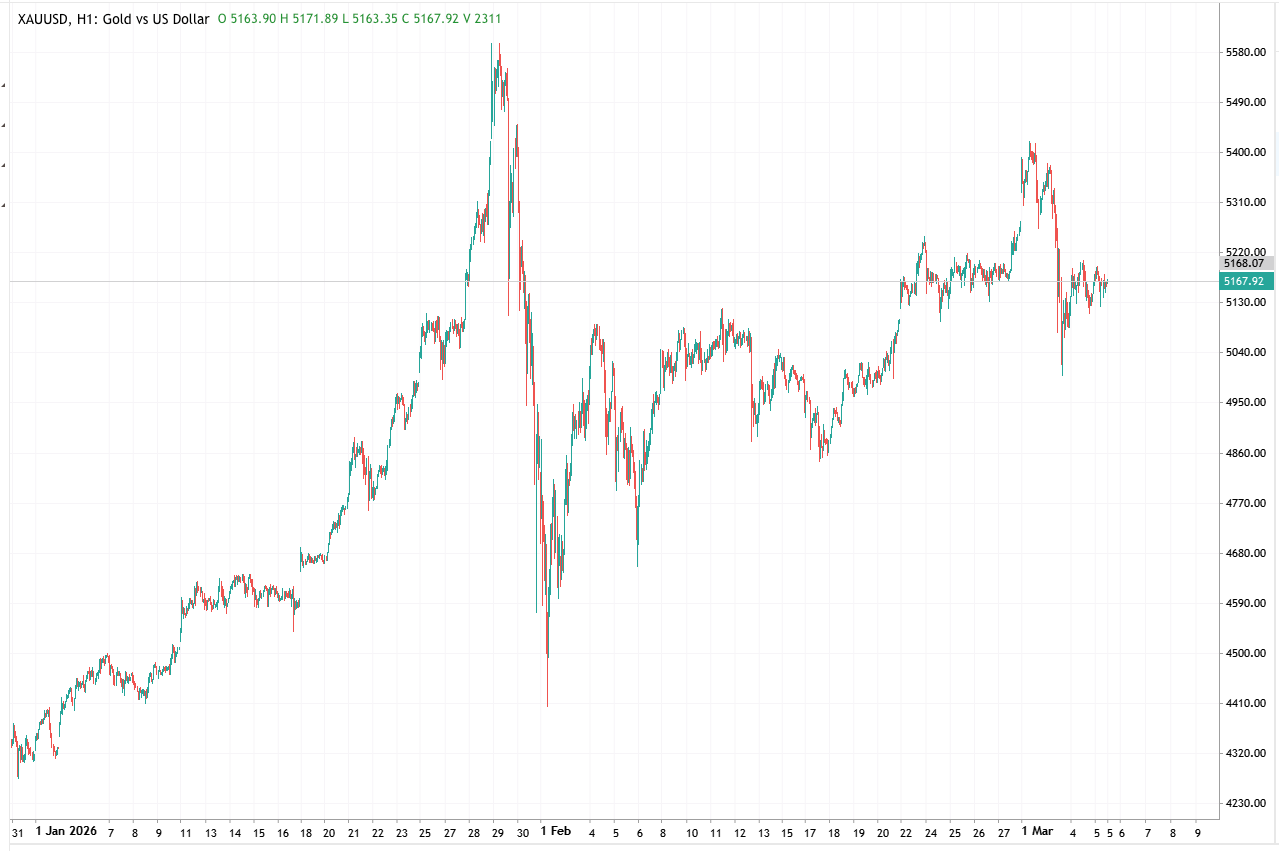
In recent geopolitical spikes, gold has experienced daily moves exceeding 2–3%, with intraday swings of $40–$60 per ounce not uncommon. Silver’s percentage moves are often larger due to lower liquidity depth compared to gold.
Volatility creates:
- Opportunity for short-term traders
- Increased margin requirements
- Greater risk of stop-loss slippage
Emotional pressure
Traders using CFDs must pay attention to leverage. While leverage amplifies potential returns, it also magnifies losses. Proper margin management becomes critical during fast markets.
Trading strategies for geopolitical markets
Different trader profiles respond differently to instability.
Scalping during headline spikes
Scalpers operate on 1–15 minute charts, targeting small price inefficiencies after breaking news.
Best conditions:
- Post-announcement volatility
- Liquidity surges
- Strong momentum candles
Tools on Deriv MT5:
- Tight stop-loss orders
- One-click trading
- Short-term moving averages
- RSI divergence detection
Risk focus:
Keep position sizes small due to rapid price swings.
Breakout trading after consolidation
Gold frequently consolidates before major geopolitical headlines.
Setup:
- Identify tight range.
- Wait for confirmed breakout with volume expansion.
- Enter in direction of breakout.
- Place stop-loss below broken resistance (or above support for shorts).
False breakouts (“fakeouts”) are common during uncertain conditions. Waiting for candle confirmation reduces whipsaw risk.
Trend following during sustained crises
If geopolitical tension persists for weeks, gold may establish an uptrend supported by institutional flows.
Indicators:
- 21- and 50-period moving averages alignment
- Higher highs and higher lows
- Strong RSI staying above 50
Trend traders often trail stop-loss orders rather than setting fixed targets, allowing participation in extended moves.
Position trading for macro themes
Longer-term traders may build positions based on:
- Sustained inflation expectations
- Structural central bank gold accumulation
- Prolonged geopolitical instability
These traders use wider stop-loss levels and smaller leverage ratios to withstand temporary pullbacks.
Technical levels that matter
Geopolitical markets respect psychological price zones.
Gold often reacts around round-number thresholds (e.g., $4,500 or $4,600 per ounce). These levels act as liquidity clusters where institutional orders accumulate.
Silver frequently stalls at round numbers such as $80 or $95.
Support and resistance, Fibonacci retracements, and moving averages often converge at these levels, strengthening their significance.
How to trade gold and silver CFDs on Deriv MT5
Trading precious metals on Deriv involves the following steps:
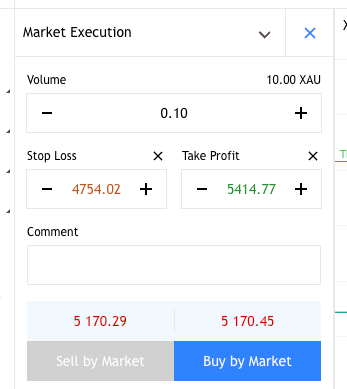
- Open Deriv MT5.
- Select XAUUSD (gold) or XAGUSD (silver).
- Choose trade size (lot size determines exposure).
- Set stop-loss order to limit downside risk.
- Set take-profit order to lock in gains.
- Monitor margin level to avoid forced liquidation.
Because CFDs allow both long and short trades, traders can respond to:
- Escalation by buying gold
- De-escalation or rate surprises by selling gold
The platform provides:
- Advanced charting tools
- Built-in technical indicators
- Customisable timeframes
- Demo account access for strategy testing
Practising in a demo environment helps traders understand volatility impact without financial exposure.
Risk management in unstable markets risk management strategies
During geopolitical uncertainty, risk management is more important than entry timing.
Position sizing
Reduce lot size when volatility expands. A smaller position in a volatile market can carry the same risk as a large position in calm conditions.
Stop-loss discipline stop-loss orders
Every trade should have a predefined exit point. Stop-loss orders protect trading capital and prevent emotional decisions.
Avoid over-leveraging
High leverage may seem attractive during strong trends, but sudden reversals can rapidly erode equity.
Plan scenarios in advance
Ask:
- What happens if conflict escalates?
- What happens if a diplomatic resolution is announced?
- What if inflation data surprises?
Structured planning reduces reactive trading.
When might gold and silver fall?
Even during geopolitical tension, corrections occur.
Possible bearish triggers:
- Rapid diplomatic breakthroughs
- Stronger-than-expected economic growth
- Unexpected aggressive rate hikes
- Sharp USD appreciation
Understanding both bullish and bearish scenarios ensures balanced decision-making.
Conclusion: Structured opportunity in geopolitical volatility
Trading gold and silver CFDs on Deriv MT5 during periods of geopolitical instability offers significant opportunity — but only when approached with discipline.
Gold tends to benefit from sustained uncertainty and weakening real yields. Silver amplifies moves due to its industrial sensitivity. Both assets react strongly to Federal Reserve signals, inflation releases, and escalation headlines.
Successful traders in 2026 markets share three traits:
- Clear macro awareness
- Defined technical entry and exit rules
- Strict risk management through stop-loss orders and controlled leverage
Volatility is not inherently dangerous — unmanaged volatility is.
Using Deriv’s MT5 platform, demo account, and charting tools, traders can structure their approach and participate in global price movements without owning physical metals
Quiz
Which of the following is most important when trading gold and silver during high volatility?
FAQs