Spotting trends before they flip: The power of patterns
While no tool can predict the future with certainty, chart patterns can offer valuable insights. They’re among the most widely used resources in a trader’s toolkit, providing clues about where price action might go next based on historical behaviour.
And one of the most well-known (and widely respected) patterns? The head and shoulders.
Why patterns matter in technical analysis technical analysis
Technical analysis is all about using past price movements to anticipate future ones. Think of it like reading footprints on a trail - patterns help traders spot when something familiar is forming, and what typically happens next.
Chart patterns, in particular, can reveal moments of indecision, exhaustion, or fresh momentum in the market. They don’t guarantee an outcome (nothing does), but they do give you an edge - helping you act before the crowd catches on.
Some patterns suggest that a trend is likely to continue, while others (like the head and shoulders) signal that a reversal might be around the corner.
What is the head and shoulders pattern?
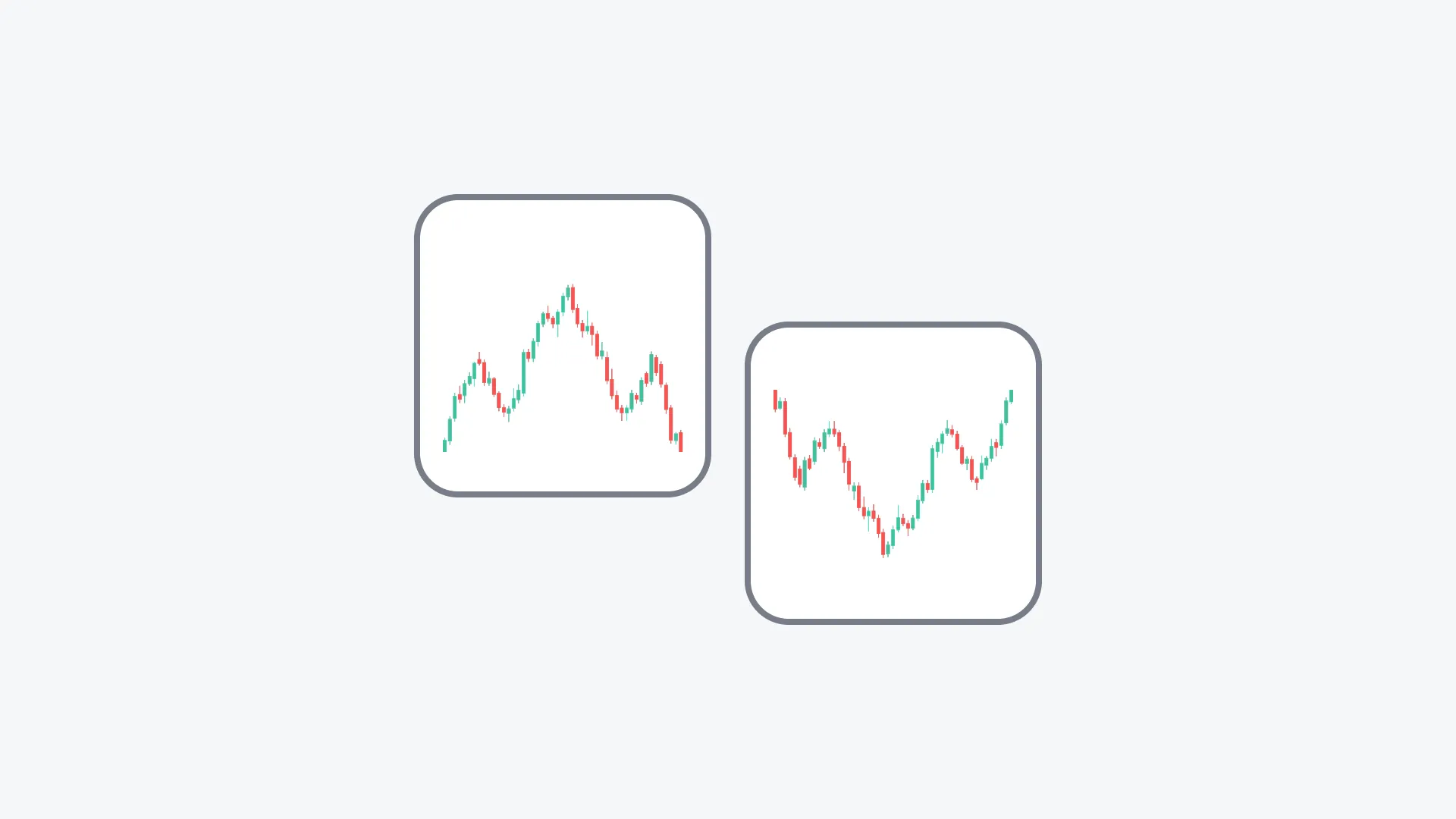
The head and shoulders pattern is a classic reversal signal. It usually appears at the end of an uptrend and suggests that the asset’s bullish run might be coming to an end.
Here’s how it looks:
- Left shoulder: Price rises, then pulls back slightly.
- Head: Price rises again, higher this time, then pulls back again.
- Right shoulder: A final rise, but not as high as the head, followed by another drop.

The neckline (a support level drawn under the shoulders) is key. Once the price breaks below this neckline, it’s often taken as confirmation that the trend has reversed, and a potential downtrend has begun.
In essence: It’s a sign that buyers are running out of steam, and sellers are starting to take control.
How to identify a head and shoulders pattern: Step by step
- Spot an existing uptrend. The pattern works best when it signals a potential reversal, not a continuation.
- Watch for three peaks. A high (left shoulder), a higher high (head), and a lower high (right shoulder).
- Draw the neckline. Connect the two troughs between the peaks.
- Wait for the break. A clear drop below the neckline often confirms the pattern and signals a possible bearish move.
This process helps traders avoid jumping the gun too early and ensures the pattern is well-formed before acting.
Bullish vs bearish: The inverse head and shoulders
Just as the standard head and shoulders pattern signals a reversal from an uptrend to a downtrend, the inverse version works the other way around.
- The inverse head and shoulders appears at the bottom of a downtrend.
- The pattern looks like a person doing a headstand with a low, an even lower low, and then a higher low.
- The breakout above the neckline in this case suggests a bullish reversal and can be a strong buy signal.

Technical analysis: Trading the pattern استراتيجيات التداول
So, you’ve spotted a head and shoulders (or its upside-down twin, the inverse head and shoulders). Great! Now what?
Here’s how to trade it smartly without jumping the gun or letting emotions take the wheel.
Entry and exit points
The most common (and conservative) approach is to wait for a breakout beyond the neckline.
- For a standard head and shoulders, you’d look for a break below the neckline to confirm a bearish reversal.
- For an inverse head and shoulders, a break above the neckline suggests a bullish breakout.
Entry insight:
Don’t enter as soon as the price nudges the neckline. Wait for a clean break with solid volume, or consider a retest of the neckline as support or resistance before jumping in.

Setting targets and stops risk management strategies
Once you’re in the trade, it’s all about managing risk and reward.
- Price target
Measure the distance from the head to the neckline, then project that same distance from the breakout point.
This gives you a reasonable target zone. - Stop-loss
A common strategy is to place your stop just above the right shoulder (for a short trade) or just below it (for a long trade in an inverse pattern).
That way, you’re protected if the pattern fails.
Pro insight: Always ensure your potential reward outweighs your risk, ideally at least 2:1.
Common mistakes to avoid
- Jumping in too early
Wait for confirmation. Premature entries before the neckline breaks can lead to whipsaws. - Ignoring volume
A breakout with weak volume might be a false alarm. Volume helps confirm the momentum behind the move. - Misidentifying patterns
Not every three-peak structure is a head and shoulders. Make sure the head is clearly higher (or lower) than both shoulders and that the neckline is well-defined. - Forgetting the trend context
This is a reversal pattern. If there is no clear prior trend, the signal is weaker.
When and where to use the head and shoulders pattern?
Like any tool in technical analysis, the head and shoulders pattern is observed to be very effective when used in the right place at the right time. Here’s where it tends to shine and where it might struggle.
Asset classes
The head and shoulders pattern is a bit of an all-rounder, you’ll find it across:
- Equities: One of the most common spots. It’s often used to spot potential reversals in individual stocks, especially after strong trends.
- Indices: Works well on broad market indices like the FTSE 100, DAX, or S&P 500, where sentiment shifts can create textbook setups.
- Forex: Particularly effective on major currency pairs (e.g. GBP/USD, EUR/USD) where trends are strong and volume is high.
- Commodities & cryptos: It can appear here too, but be cautious: these markets can be more volatile and prone to false breakouts.
Time frames
This pattern isn’t tied to one specific time frame, but here’s the sweet spot:
- Daily and 4-hour charts: These tend to produce the cleanest and most reliable patterns, with enough price action to filter out noise.
- Weekly charts: Great for spotting major trend reversals, though they take longer to play out.
- Short term (1H or below): Can work, but be careful. Noise, fake-outs, and low volume can reduce reliability. If you're trading lower time frames, pair the pattern with volume and confirmation tools.
Ideal market conditions
The head and shoulders pattern works best when the market is transitioning from a clear trend to a potential reversal. That means:
- Strong preceding trend: Whether bullish (for standard head and shoulders) or bearish (for inverse head and shoulders), the pattern needs something to reverse from.
- Clear momentum shift: Volume fading on the head, followed by a decisive break of the neckline, is a strong signal that the trend has run its course.
- Cautious optimism: In sideways or choppy markets, the pattern becomes much less reliable and more likely to subject you to fake outs.
اختبار
أي من العبارات التالية تصف بشكل أفضل نمط الرسم البياني الرأس والكتفين؟
الأسئلة الشائعة





.png)